
Digital services for resilient agriculture in the Hindu Kush Himalaya


Summary
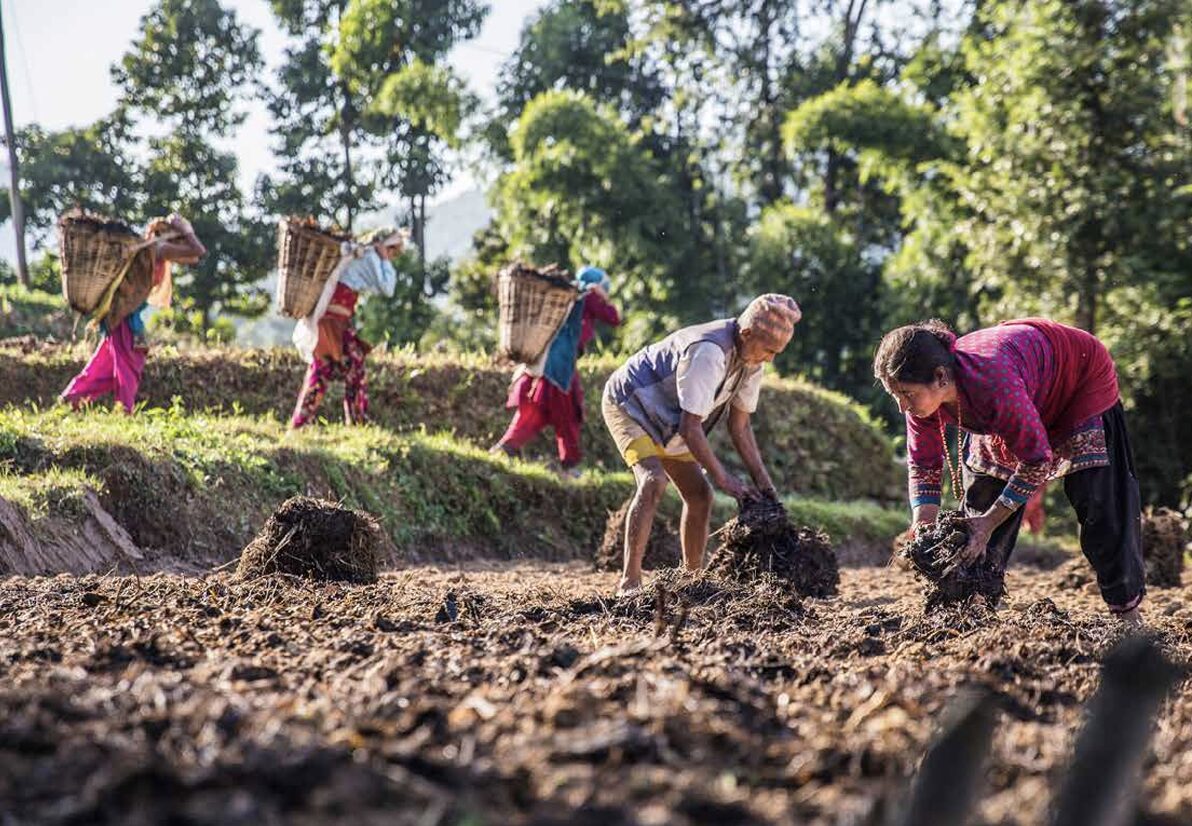
Remote areas in the Hindu Kush Himalayan (HKH) region often lack access to markets and service providers, such as agriculture advisory services. These services can benefit farmers and farmer groups, keeping them up to date with important information, such as new technologies or market trends, and better enabling them to adapt to climate change. This solution will make these services accessible through an online application (app), training provision and the development of facilities to support the community.
Complex topography and lack of infrastructure can be limiting factors, hindering farming communities from accessing relevant and timely information, such as weather forecasts or information about seeds, pests, fertilizers and market prices. Therefore, digital services that use satellites and information communication technologies (ICT) offer novel opportunities to support farmers to increase food and nutrition security, as well as take advantage of economic opportunities.
Access to market information is vital to farmers so that they can correctly price their products and capitalize on market fluctuations. Having market information empowers farmers to negotiate a better price for their products from intermediaries in the agricultural supply chain. Agricultural producers in remote mountain regions are often unaware of market prices and rely on information from traders and agents to determine whether, when, where or for how much to sell their crops. Delays in obtaining this data or misinterpretation of second-hand pricing information has serious consequences for agricultural producers, who may end up underselling the value of their products or delivering too little or too much product.
By exploiting the opportunities arising from increased smartphone ownership, even in rural areas, the short message service (SMS) solution has undergone a dynamic evolution towards a system including increased agricultural services that support commercial and smallholder farmers at all stages of the crop value chain. Different apps or platforms should be connected and allow information-sharing from a specific individual or group of farmers to the community for optimum adaptation to the changing environmental conditions.
Overview
- Location:
- Implementation sites:
-
- Single country
- Multiple locations
- Mountain region:
-
Hindu Kush Himalaya
- Solution scale:
- Ecosystem type(s):
- Solution type(s):
- Sector(s):
- Climate impact(s) addressed:
- Climate impact time-scale(s):
- Main benefit associated with the solution:
- Co-benefit(s) associated with the solution implementation:
-
- Climate risk reduction (e.g. reduced risk from floods)
- Environmental benefits (e.g. biodiversity preservation, water security, food security)
- Social benefits (e.g. poverty reduction, inclusiveness and equity, health and well-being)
- Technical benefits (e.g. innovative use of geographic information systems)
- Sendai targets:
-
- SDGs:
-
-



Solution details
Main beneficiaries & outcomes
The use of this kind of app has:
- Enhanced farmers’ decision-making capacity to plan harvesting and other farming activities
- Made it easier for farmers to receive the correct price for their produce by providing market information
- Helped farmers adapt to climate change by providing relevant technical information that encourages more resilient practices.
The digital services solution also appears to have particular benefits for rural women, as they find it easier to work with a more neutral third party through the app. Men moving away from rural areas has resulted in increased responsibilities for women in the agricultural sector. The advisers for agriculture and market information are mostly men, whom women are reluctant to interact with due to traditional roles and societal norms.
“I have been using this app for more than a year. In my community, not all of us have an Internet connection and so several women farmers come to me to ask about an issue they might have. If the information is not in the app, we can post a question and we get an answer back. One time, I was at Bhakunde market to sell my cauliflower. A trader offered me 20 Nepalese rupee per kg, but I showed him the app with the real market price, then I sold it for 50 Nepalese rupee per kg. I would encourage all other women farmers to use the app. It is useful and easy to use!” – woman farmer in Namobuddha Municipality, Khawa in Kavre, Nepal.
Planning and implementation
The solution is “one-stop-shop” apps for smartphone users based on free data about vital agricultural and market information. These apps will be developed and targeted at smallholder farmers in specific remote mountain areas.
The solution can provide farmers with information throughout all the agricultural stages. Depending on the location, farmers should be provided access to suggestions of the best-adapted crops to grow in their particular area. Information such as the water needs, the growing cycle and retail prices should be integrated into the app, which needs to have an offline mode that allows increased flexibility for farmers without a reliable internet connection.
The following factors should be assessed to best implement this solution:
- the number of farmers in the community.
- the availability of mobile network and internet connectivity in the specific area.
- the preparedness of the local administration and bureaucratic institutions for developing the technology and ensuring long-term support.
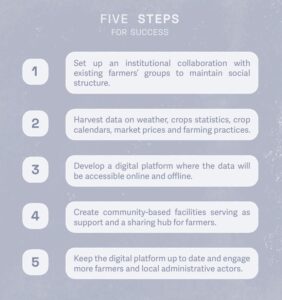
Institutional collaboration, data availability, harvesting, and visualisation, community-based facilities, and stakeholder engagement are also key success factors (see image below).
When creating a digital platform, it is important to include various academic information and functional tools, which are very beneficial to users of the app. The development of apps needs an initial cost to cover expenses such as co-design, development, content curation, application hosting, expert consultation and other operation costs.
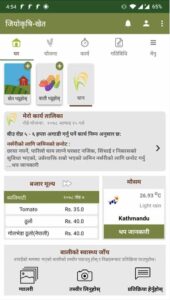
In collaboration with GeoKrishi, Pathway Technologies and Services Pvt. Ltd., and in coordination with the implementing partner the Center for Environmental and Agricultural Policy Research, Extension and Development (CEAPRED), The International Centre for Integrated Mountain Development’s Resilient Mountain Solutions initiative has developed four apps that provide location specific agriculture advice and other tailored information to end users in Nepal:
- Geokrishi Farm – a mobile app to provide access to timely and context-specific advice for individual farmers.
- Geokrishi Ext – an app and web system for extension service providers to streamline communication and knowledge exchange, track farmer progress and build loyalty.
- Geokrishi Enterprise – a customizable web platform for operational and strategic decision-making, tracking and monitoring collective progress, assessing yield and risks, forecasting productions, optimizing aid disbursement, identifying potential markets, and activating collective buying and selling.
- Samuhik Bazar – a business-to-business dynamic marketplace platform that promotes product collection and efficient supply chain operation.
These applications are interconnected to enable information-sharing between users. In addition, a dedicated call centre, incubation centres and other types of information hubs with trained staff have been established to support the end users.
Finance
Information not provied
Innovation
Information not provided
Capacities for design and implementation
Knowledge
This solution requires trained individuals who can guide the local farmers in using the app and maintain effective communication between the service providers and farmers.
Technology
This effective implementation and use of a digital platform relies on the availability and consistency of mobile network and internet connectivity. This digital solution uses satellite and ICT to overcome specific rural and mountain challenges.
Institutional
It is important that the local authorities or knowledge centres are involved from the beginning and are committed to engage with the service in the long term. This often requires commitment at the governmental level.
Socio-cultural
Since these digital solutions go beyond the purely technical development of the apps, strong local connections are important to ensure their sustainability. It is therefore important to work closely with local implementing partners to ensure that the information provided through the app is useful and relevant and that households can understand and act on the information they receive. This will require continuous monitoring and commitment from the partners.
The longevity of this solution also depends on collaboration with local administrative actors and farmer groups, building capacity in key individuals and confirming continuous support to the end users of the digital services. The farmers need continuous support for decision-making, organized via call centres, incubation centres and community facility centres.
Outlook & Scalability
Barriers and adverse effects
Lack of Internet coverage is a particular bottleneck to the full use of the app in remote areas. While several of the app’s functions should work in offline mode, the initial set-up and certain functions still require Internet access. Also, while smartphone ownership is increasing, the most disadvantaged may not have access to the app if they do not have a smartphone or Internet access. Coverage has to be assessed before developing this solution in a certain area.
Potential for upscaling and replication
For further out-scaling of the app, it is possible to adapt the language, agricultural information and system to another country or region as the platforms are highly dynamic and flexible. Similar solutions have been in use around the world for some time: in Uganda, digital services have helped farmers increase their production by 10 per cent, while in Niger they have increased farmers’ profits by 29 per cent and reduced market price dispersion by 10 per cent.
- Geokrishi - digitial agriculture platform and solutions
- TENDHIS web application, “Historical precipitation and temperature trends” from SENAMHI, Peru
- Restoring the hydrological functions of mountain agricultural terraces to address multifaceted climate and water-induced disasters
- Resilient women for resilient mountain villages: A holistic approach to climate change adaptation in Nepal
- Going organic for a sustainable future in Kavre, Nepal
- Solar powered pumps for irrigation in Pakistan
Comments
There is no contentYou must be logged in to reply.