Glaciers in the spotlight: Footsteps on ice: Memories of glaciers and change

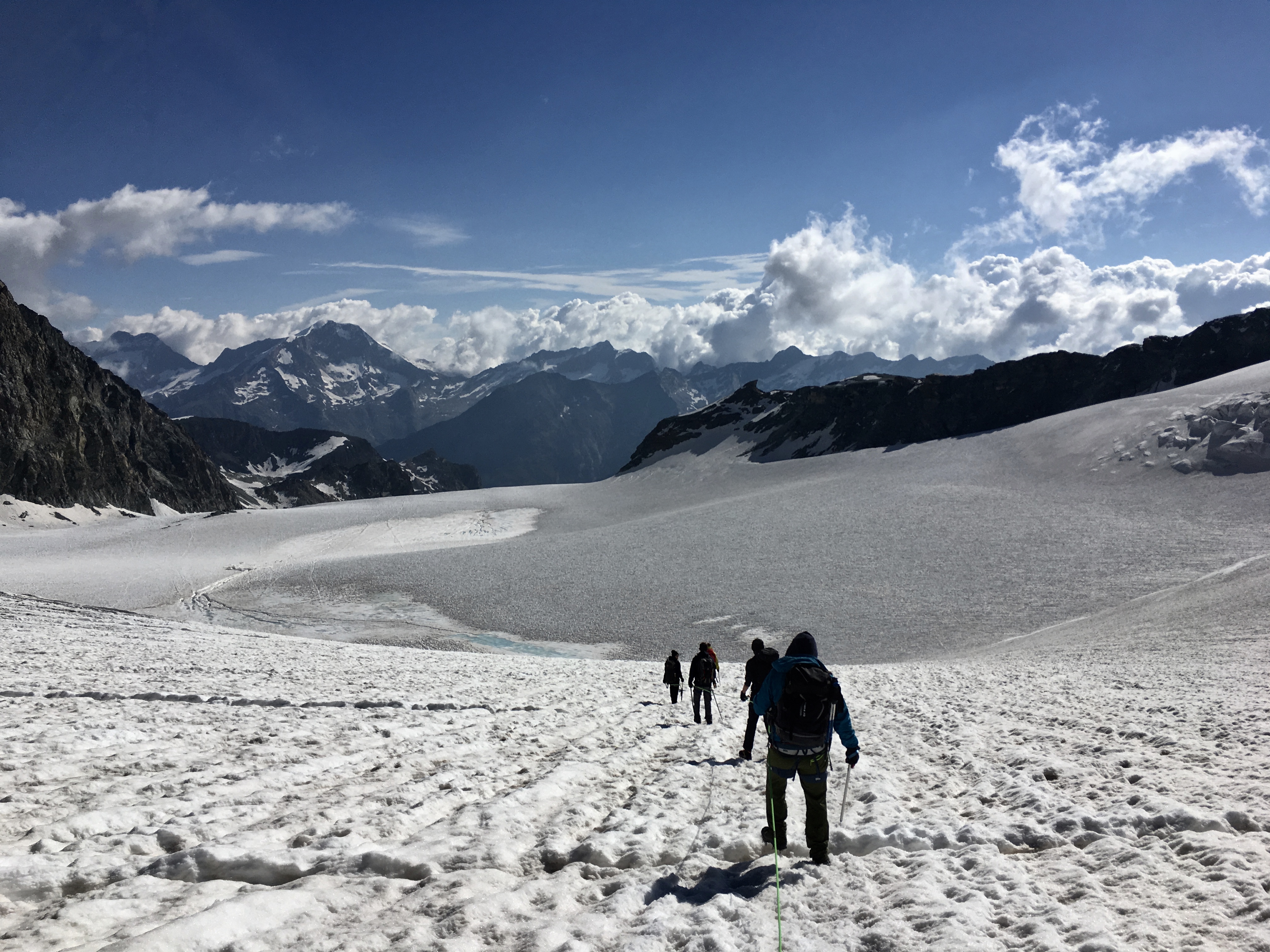
To highlight the UN International Year of Glacier Preservation, the Adaptation at Altitude programme is collecting and sharing stories from the glaciers to highlight peoples experiences with their local glaciers.
Read Lina Rodriguez’s story
Read Lina’s story, about her first experience of seeing/walking on the Allalin Glacier in Switzerland and the Chacaltaya Glacier in Bolivia.
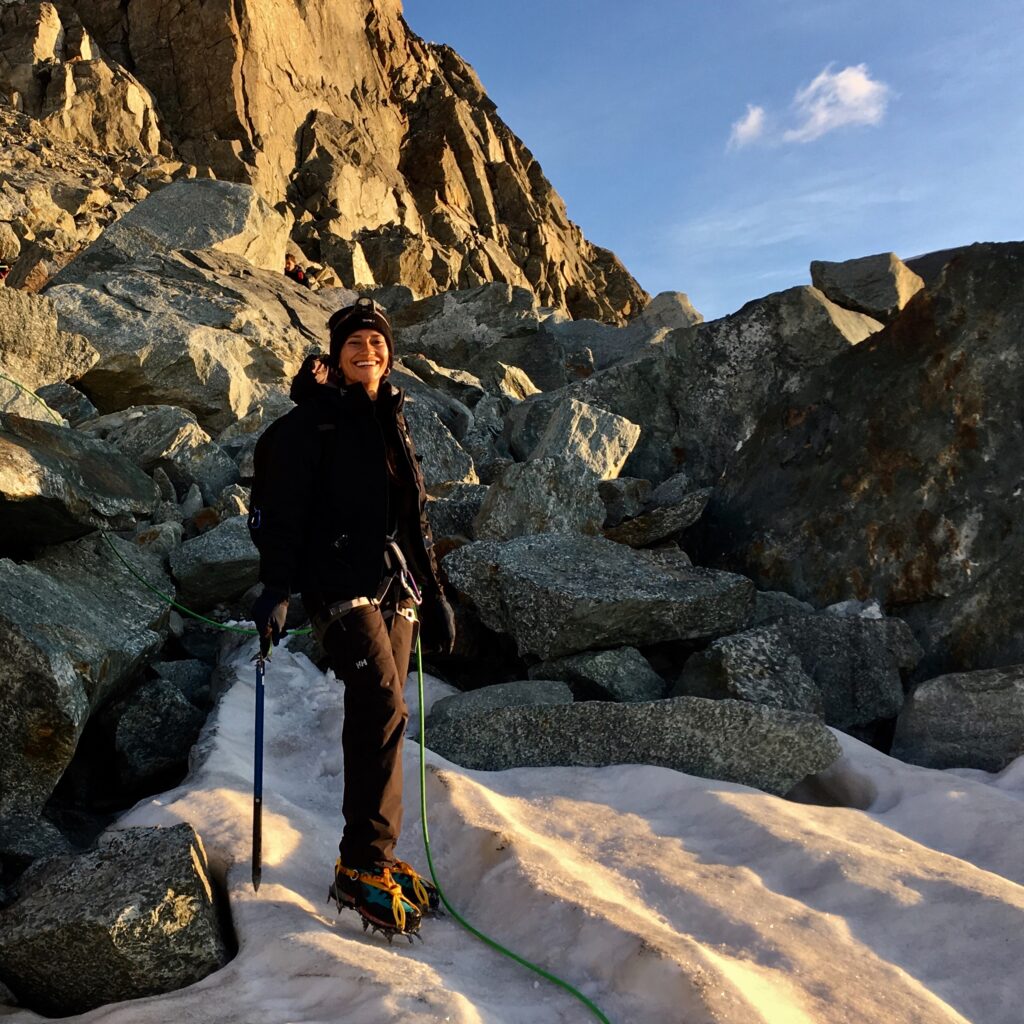
Lina Rodriguez
Lina Rodriguez is a PhD student at the University of Geneva and researcher at GLOMOS (UNU-EHS). Lina’s work has often centered on combining Indigenous and local knowledge with climate science to improve how communities understand, trust, and apply climate information in their decision-making
University of Geneva and GLOMOS
I was born in the mountains, at 2,640 meters above sea level. In Bogota, Colombia – the city where the eastern hills (cerros orientales in Spanish) serve as a compass in a capital of more than 8 million inhabitants. Despite its elevation, Bogota is not surrounded by snow-capped peaks. So, in my daily life the image of white ice- and snow-peaked mountains was not common, even though I knew it existed and lay in the country’s highest mountains.
This has changed.
In recent decades, Colombia has lost approximately 90% of its glacier coverage. Today, only six glaciers remain. All of these surviving glaciers are in the region’s highest reaches, at least 4,900 meters above sea level.
I left my country when I was 18, having never approached a mass of ice that required wearing crampons and adapting to the altitude to step on it and hear the crunch of my footsteps as I walked across it.
Experiencing a glacier’s presence
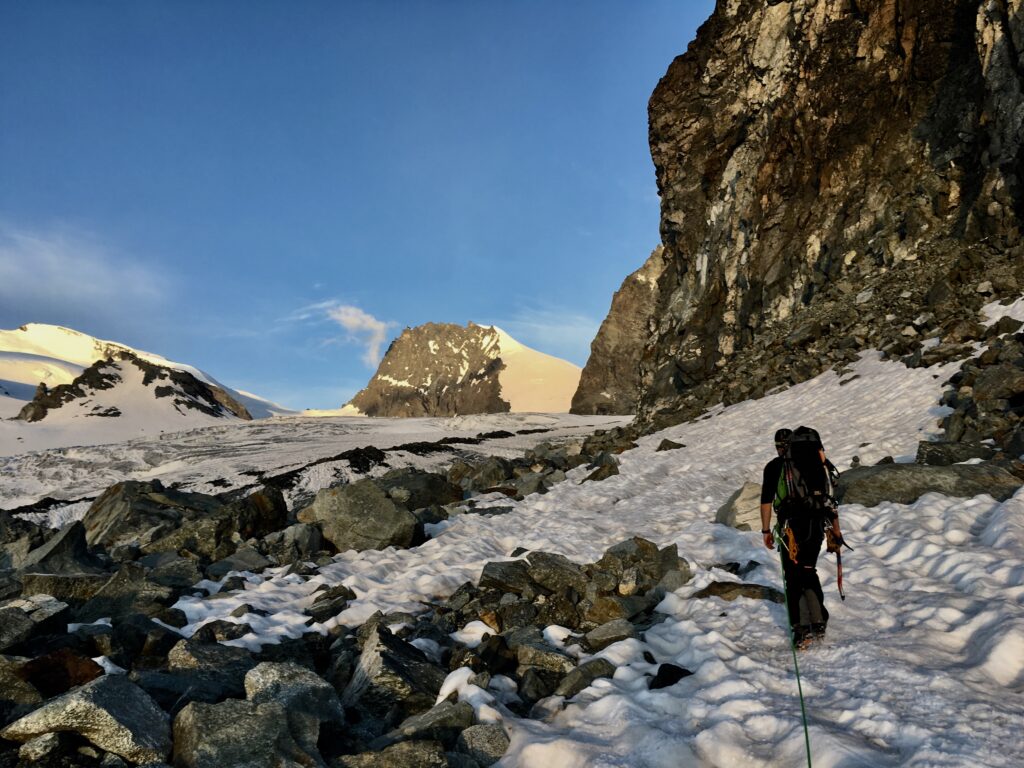
It was six years later and, in another country, – Switzerland – when, I experienced something like it. For the first time, with my boots gripped firmly onto crampons, I secured my body to a rope that guided me and my friends single in file up a mountain.
There, I watched the sunrise emerge from behind the whiteness of the Allalin Glacier. I remember that landscape vividly—the vastness of the ice, the sound of the wind, and the roughness of a surface that seemed to stretch infinitely toward the horizon.

2018, Allalin Glacier, Switzerland. Credit: Lina Rodriguez.
Confronting a glacier’s loss
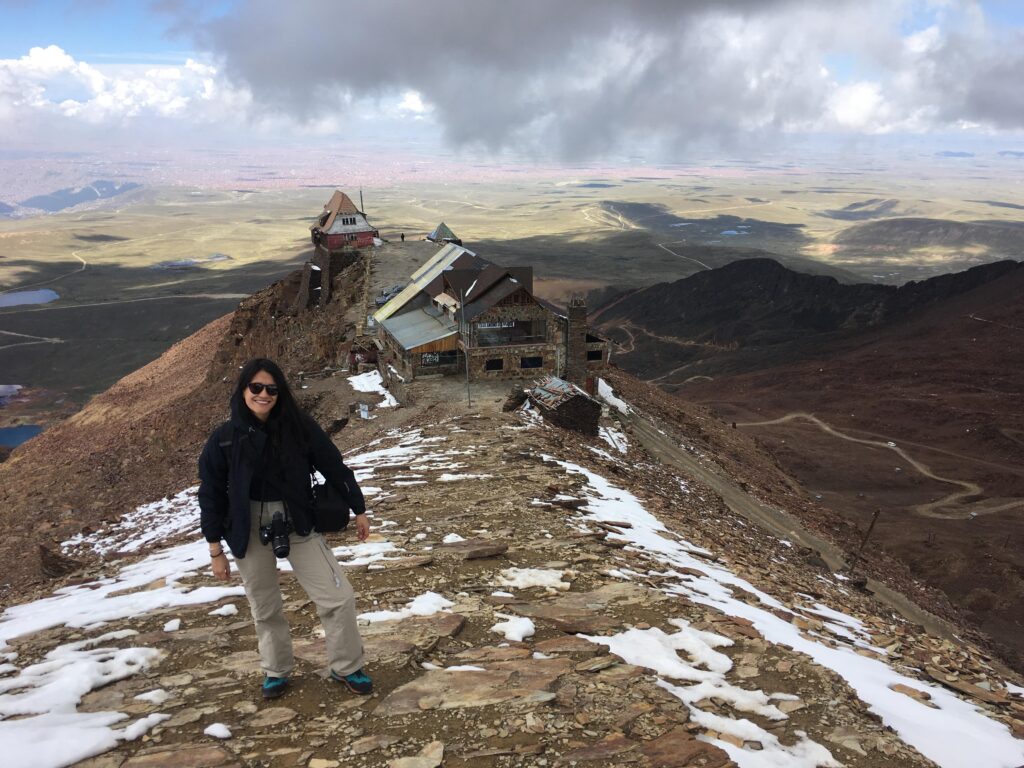
A year later, in Bolivia, I approached another glacier, or rather, the trace it had left behind. The Chacaltaya Glacier, at 5,421 meters above sea level and just 30 km from La Paz, once hosted the highest ski station on the planet. In1998, experts who had studied the glacier for many years had predicted that it would last until 2015. Events overtook the prediction. By 2009 it had almost completely disappeared.
Today one walks over a mass of exposed rocks, among the remnants of the abandoned ski infrastructure. The deserted hut of the Bolivian Andean Club, holds the memories of those who slid down the Chacaltaya’s snow-covered slopes on wooden skis or sleds. There, on the rocky surface left behind, one breathes in the nostalgia of what climate change took away, while Pedro, my friend and mountain guide, told me between sighs about his childhood among snowfalls and tourists who, like him, felt the thrill of skiing at the highest station on Earth.
Reminders of the scale of time
I often think about how fortunate I have been to encounter glaciers at all, to see their textures, hear their sounds, and feel the quiet power they hold. These great bodies of ice remind us of a scale of time far beyond our own lives. Perhaps that is why I always encourage others to witness a glacier in person if possible. Not out of urgency alone, but out of the belief that meeting one, even once, changes the way we understand the planet. Glaciers leave an imprint—of awe, of humility, and of responsibility—that stays with us long after we have left them behind.
Further resources
Comments
There is no contentYou must be logged in to reply.