
Law 1930 on Páramos, Colombia: sustainable ecosystem management


Summary
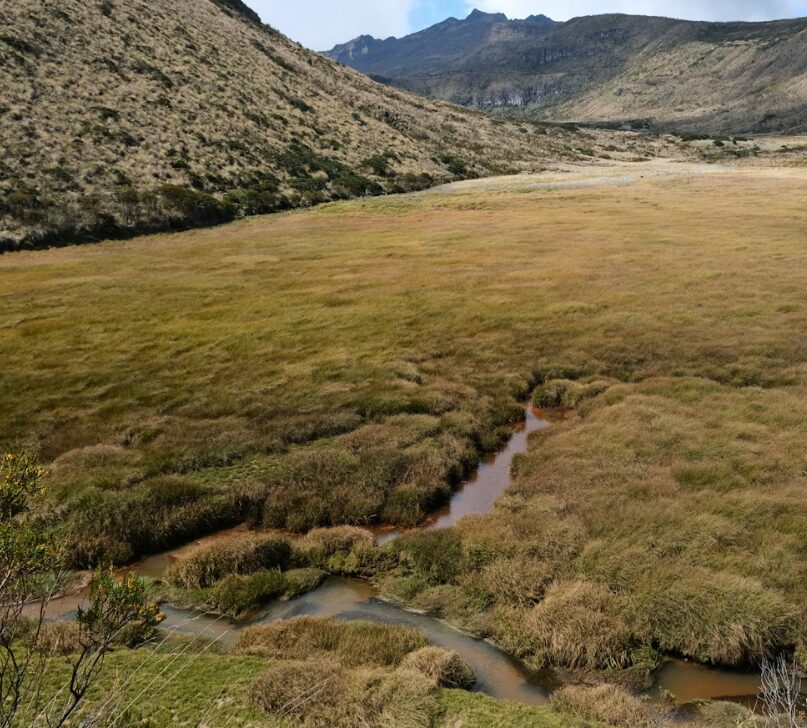
Páramo, a unique tropical Andean wetland ecosystem, is vital for biodiversity, water provision and agriculture in Colombia. Law No. 1930 was introduced to establish guidelines for their preservation, restoration and sustainable use, and as tools for knowledge generation.
The páramo ecosystems in Colombia are considered strategic for biodiversity conservation, the provision of water for human consumption, agriculture, and industry, and hydroelectric power generation. They are rich in biodiversity and provide 90% of Bogotá’s water, which comes from just three watersheds in páramo ecosystems.
Different legal instruments have been enacted to ensure proper management of páramos, eventually culminating in Law No. 1930 which was enacted in 2018. It addressed existing concerns from previous legislation and provides a long-term legal and financial framework for páramo management. It upheld an absolute ban on mining activity and established guidelines for transitioning agricultural activities toward sustainable practices, requiring the Ministries of Environment and Agriculture to develop short-term implementation protocols.
Members of Parliament or decision-makers from countries with natural ecosystems that are not currently protected areas, or that come into conflict with other economic activities, may be interested in this law.
The team would like to extend their thanks to Carlos Sarmiento for his valuable contributions to the solution.
Overview
- Location:
- Implementation sites:
-
- Single country
- Multiple locations
- Mountain region:
-
Andes
- Solution scale:
- Ecosystem type(s):
- Solution type(s):
- Sector(s):
- Other sector(s) type(s):
-
- Mining
- Climate impact(s) addressed:
- Climate impact time-scale(s):
- Main benefit associated with the solution:
- Co-benefit(s) associated with the solution implementation:
- Implementation timeline:
-
- 2018
- Sendai targets:
-
- SDGs:
-
-



Solution details
Main beneficiaries & outcomes
As a result of the law, by 2022 there was a notable decline in mining concessions. The number of contracts fell by 40%, while the total area under concession decreased by approximately 64%. Of the 511 valid titles in 2015 (covering 140,205 hectares), only 300 remained active in 2022 (covering 50,644 hectares). One of the most significant cases is the Chilí–Barragán páramo, where AngloGold Ashanti had previously operated the open-pit gold project known as La Colosa.
Further, conversion of natural páramo areas (grasslands and frailejón-dominated zones) has decreased, along with deforestation in high Andean forests and the use of fire.
Mining conglomerates were the main stakeholders impacted by the law, as well as those conducting agricultural activities. The long-term beneficiaries mainly include those reliant on the water supply (such as those living in major Andean cities), hydroelectric power companies, and those relying on páramo grasslands for other ecosystem services.
Overall, the law has had a significant impact on formal instruments, such as mining concessions and contracts, but it may not have produced a meaningful effect on the transformation of agricultural and livestock activities to date.
Planning and implementation
The law came as a follow-up to a 2011 ban, which included a formal delimitation process to define the boundaries of páramo zones and fully prohibit mining activities. Prior to this, the Mining Code only prevented new mining activities, but previously authorized projects were still allowed. The prohibition was later extended to include agricultural and livestock activities as well. Law No. 1930 was introduced in 2018, as a follow-up to these efforts and to ensure that the protections for páramos would not lapse. Law No. 1930 responded to conflicts with the existing policy by providing a long-term legal and financial framework for ecosystem management. The law continues the ban on all mining activities and introduces sustainable agricultural guidelines.
Colombia largely recognizes the value of páramo ecosystems, and various legal instruments had been previously enacted to ensure their proper management. This law and its predecessors came in response to large-scale mining initiatives introduced in order to spur economic development. Their mineral deposits (mainly gold, silver, and coal) made the areas of high interest for mining companies. Colombia enacted a Mining code to encourage these large-scale extractive activities. However, pressure from environmental groups helped to introduce the provision banning new projects in páramo zones, and eventually led to the ban.
The proposed ban in the new legislation reignited previously settled debates over mining development in these areas, as well as over the methodologies used for their cartographic delimitation. This occurred despite Constitutional Court rulings between 2016 and 2018 that had already affirmed the public interest in protecting páramos.
There were significant efforts to include exceptions for specific mining interests, brought forth regarding the economic impacts of a ban, such as reductions in national fiscal revenues, job losses, technological setbacks, and the threat of international litigation from multinational corporations with existing exploration contracts. Environmental organizations also voiced opposition to the flexibility for agricultural activities, even challenging the provision before the Constitutional Court.
Finance
N/A
Innovation
N/A
Capacities for design and implementation
Political / Legal
National Development Plans that prioritized environmental protection were used as a basis for the law, thus supporting its implementation. Court rulings on the protection of páramo ecosystems also enabled the implementation of the law.
Socio-cultural
Pressure from environmental groups helped the law gain traction.
Outlook & Scalability
Barriers and adverse effects
Some barriers to enacting this law include:
- Efforts by mining companies to highlight the economic and social impact of a definitive mining ban.
- Environmental organizations criticizing the law for its exemptions / flexibility for certain aspects.
- Contention regarding the legal framework and the cartographic delimitation of páramos.
Furthermore, some adverse impacts include that critical areas have been identified where the agricultural frontier continues to expand, even within legally protected areas such as national parks e.g. Sumapaz (near Bogotá) and Perijá (located near Venezuela border). No impact assessment has been conducted on agricultural and livestock activities, but land cover data suggests that there has not been a significant change since the law was passed (a positive impact of the law). Little regulation of agricultural practices has occurred thus far.
Comments
There is no contentYou must be logged in to reply.