
Mountain Ecosystems for a Resilient Future: Policy Pathways under the CBD and UNFCCC



Summary
This policy brief provides an overview of the international agenda on biodiversity and climate change, highlighting recent decisions and processes that elevate mountains as entry points for synergy to advance the goals of the Kunming–Montreal Global Biodiversity Framework (KM-GBF) and the Paris Agreement. It then outlines five key messages—developed in alignment with the Convention on Biological Diversity (CBD) and United Nations Framework Convention on Climate Change (UNFCCC) frameworks and grounded in scientific evidence and practical experience—that make the case for a joint agenda to halt biodiversity loss, conserve and restore ecosystems, and strengthen community resilience. The brief further advances concrete policy recommendations and a proposed way forward to align and reinforce efforts under the CBD and UNFCCC frameworks toward a common objective of conserving and sustainably managing mountain ecosystems, foster cross-regional collaboration, and mobilize transformative action leveraging ecosystem-based approaches and nature-based solutions aligned with their shared objectives.
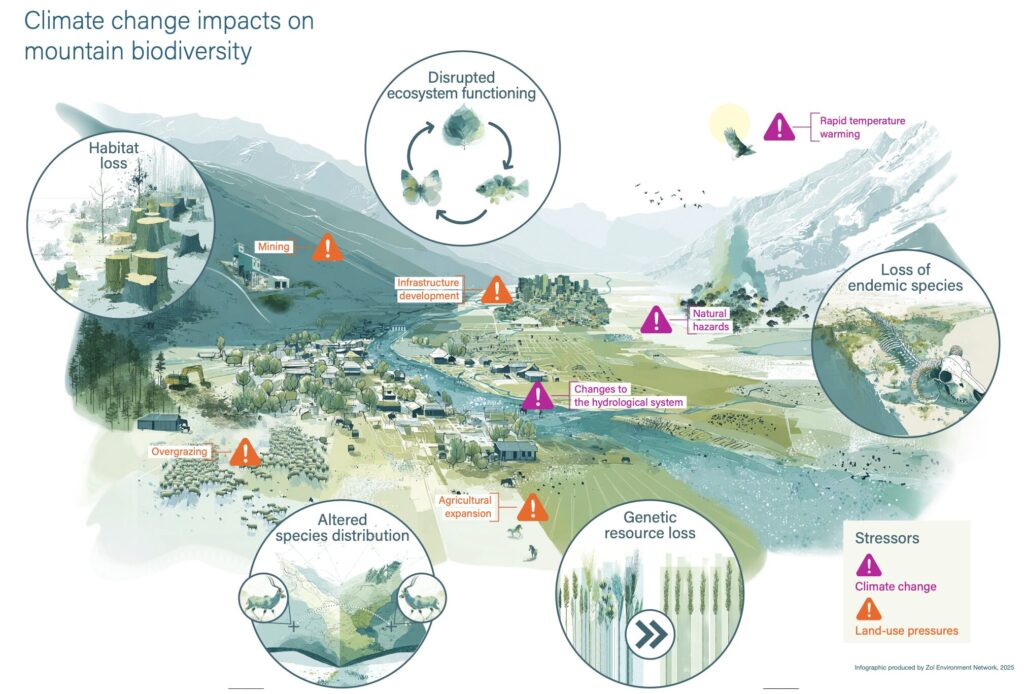
This article is an abridged version of the original text, which can be downloaded from the right-hand column. Please access the original text for more detail, research purposes, full references, or to quote text.
Introduction
Elevating the role of mountains in global climate and biodiversity agendas is essential to ensure these vital regions receive the attention and resources they urgently require. Embedding mountain-specific actions within national instruments, international policy frameworks and financial mechanisms helps countries meet global commitments, mobilizes resources, and ensures that mountain conservation contributes measurably to global biodiversity and climate goals. while ensuring benefits that extend far beyond mountain borders.
Key messages: the role of mountain ecosystems in achieving CBD and UNFCCC goals
1. Mountain ecosystems harbour unique and exceptionally rich biodiversity
2. Mountain biodiversity is essential for climate resilience and ecosystem stability
3. Climate change and mismanagement are driving a mountain biodiversity crisis
4. Conservation of mountain ecosystems is essential for achieving global environmental goals
5. Mountain platforms play a pivotal role in advancing biodiversity and climate action across all levels
Policy recommendations and way forward
As implementation of the Kunming-Montreal Global Biodiversity Framework under the CBD and the Global Goal on Adaptation under the UNFCCC gains momentum, mountain ecosystems offer a unique opportunity to operationalize the climate–biodiversity nexus. They must be recognized as a strategic and cross-cutting priority. Their transboundary nature, biodiversity richness, ecological distinctiveness, and critical contributions to water security, food systems, and climate resilience position them as ideal ecosystems for achieving integrated climate and nature goals and advancing synergy between the two conventions.
The brief develops several policy recommendations across key areas:
- Revitalizing the Mountains Agenda under the CBD
- Advancing the Mountains Agenda under the UNFCCC
- Fostering synergies between biodiversity and climate conventions
- Leveraging platforms and networks for implementation and advocacy
Suggested citation
Becerra, M. T. (2025). Mountain Ecosystems for a
Resilient Future – Policy Pathways under the Conventions on Biological Diversity (CBD) and Climate Change (UNFCCC). Adaptation at Altitude programme.
Further resources
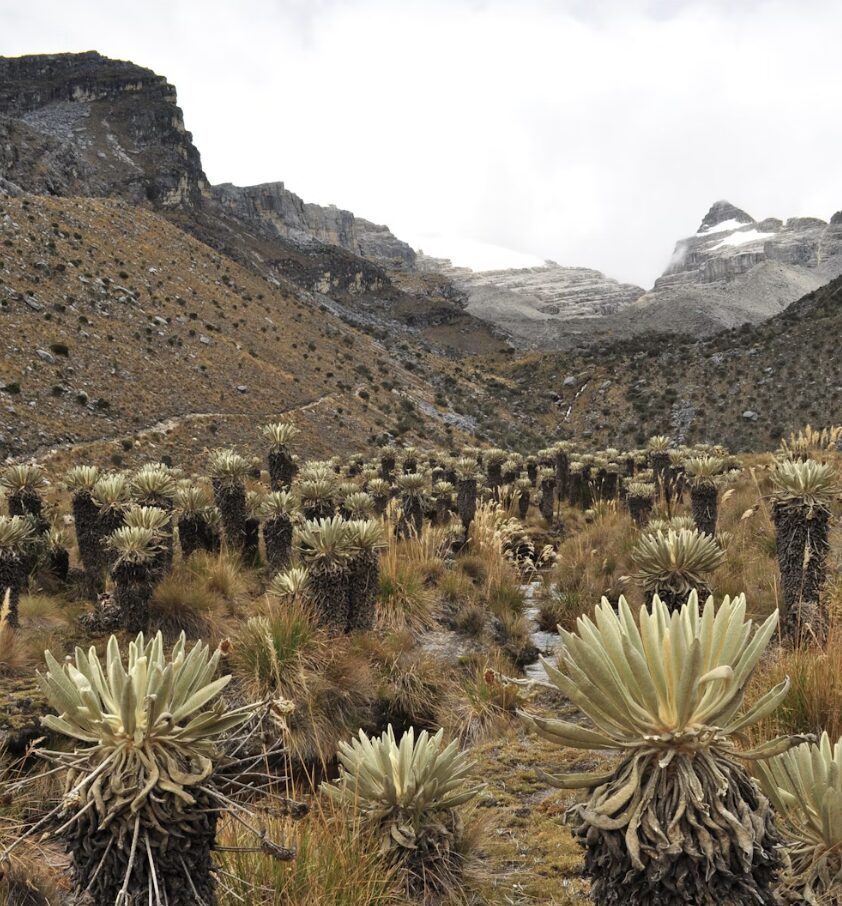



Meeting of Mountain Platforms of the Alps, East Africa and the Andes: Connecting Biodiversity Conservation and Climate Change Adaptation
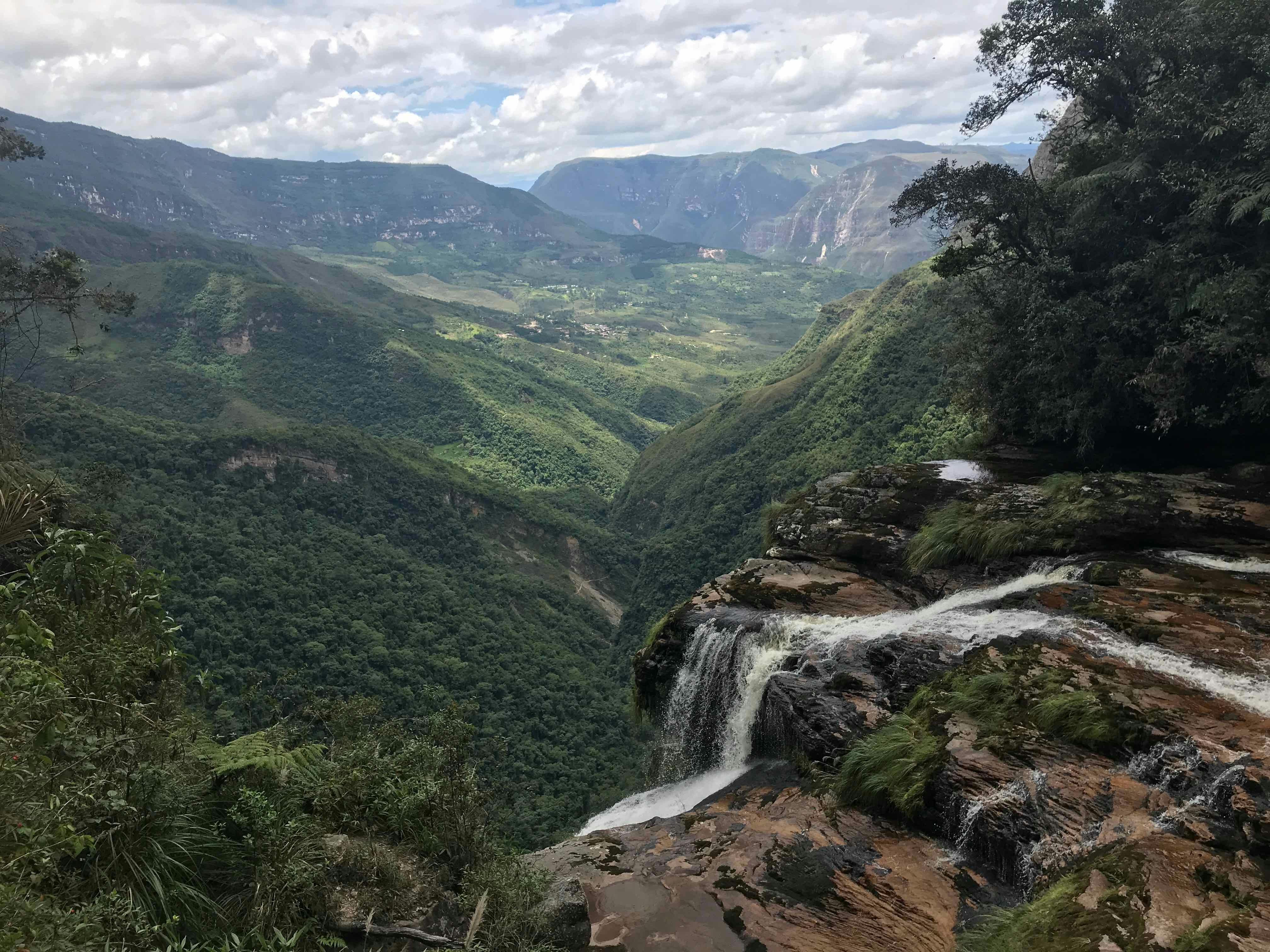
Third IAM Science-Policy Meeting: Promoting the Integration of Biodiversity and Climate Change in Mountains





Transboundary climate risks and adaptation in mountain areas: a brief for Parties and Observers to the UNFCCC




Comments
There is no contentYou must be logged in to reply.