Why glaciers matter – and the new push to protect them

This article was originally published on the UNEP website, and can be accessed here: Why glaciers matter – and the new push to protect them. Please access the original text for more detail, research purposes, full references, or to quote text.
Introduction
Between May and September 2025, avalanches, landslides and flash floods tore through mountain communities in Switzerland, Nepal and Pakistan, wiping out infrastructure and causing deaths and displacement. The three disasters had similar triggers: permafrost thaw and glacial lake outburst floods, when rapid increases in meltwater cause glacial lakes to burst their banks.
These outbursts are becoming more frequent because of the climate crisis and are estimated to threaten 15 million people globally. They are also warning signs of how badly glaciers – some of the most sensitive indicators of climate change – are suffering. According to the World Meteorological Organization’s latest report on glaciers, 2024 saw all glacier regions worldwide report losses due to rising temperatures and changing rain and snowfall patterns for the third straight year.
The quick pace of glacial change
Glaciers are among the planet’s most vital yet vulnerable ecosystems. Found on every continent, they store about 70 per cent of the world’s fresh water that’s held in ice in the colder months and released in warmer seasons, sustaining rivers, agriculture, hydropower and many forms of life – from plants to animals. Yet their shrinkage is reshaping landscapes and endangering more than 2 billion people who depend on seasonal meltwater for their livelihoods.
Glacier melt should be part of a stable hydrological cycle, but increasing atmospheric greenhouse gas concentrations are pushing it too far and creating vicious feedback loops. Environmental changes like more frequent storms and air pollution are depositing black carbon, dust and sand on glaciers, darkening them and reducing their ability to reflect sunlight. This accelerates ice melt, causing permafrost to thaw and release additional greenhouse gases, spurring more warming.
In the near term, this is threatening the stability of ecosystems like glacier lakes, and downstream communities are paying the price. In the longer term, the exhaustion of ice reserves will affect global water security and sea-level rise. In terms of biodiversity, it threatens the habitats and spawning grounds of freshwater species, while disruptions to the complex microbial communities found in the cryosphere will have implications that scientists are only beginning to understand.
Choices made this decade are determinant of the ice left for future generations. At an average of 1.5°C of global warming, more than 54 per cent of the world’s glacier mass will remain, as compared to in 2020; at 2.7°C, only 24 per cent. The United Nations Environment Programme’s 2025 Emissions Gap Report found that current policies put us on track for 2.8°C.
Slovenia and Venezuela have already lost all of their glaciers, and researchers continue flagging regions soon to follow suit. Tropical and low-lying glaciers, for instance in Peru, Indonesia and Uganda, are on track to disappear by 2100, and in the Hindu Kush Himalayas, where glaciers feed major river basins supporting some 2 billion people, only a quarter of ice is likely to remain at 2 degrees of temperature rise. Caucasus glaciers are also rapidly retreating, having already caused a loss of more than 11 billion tons of fresh water.
East Africa on the frontline
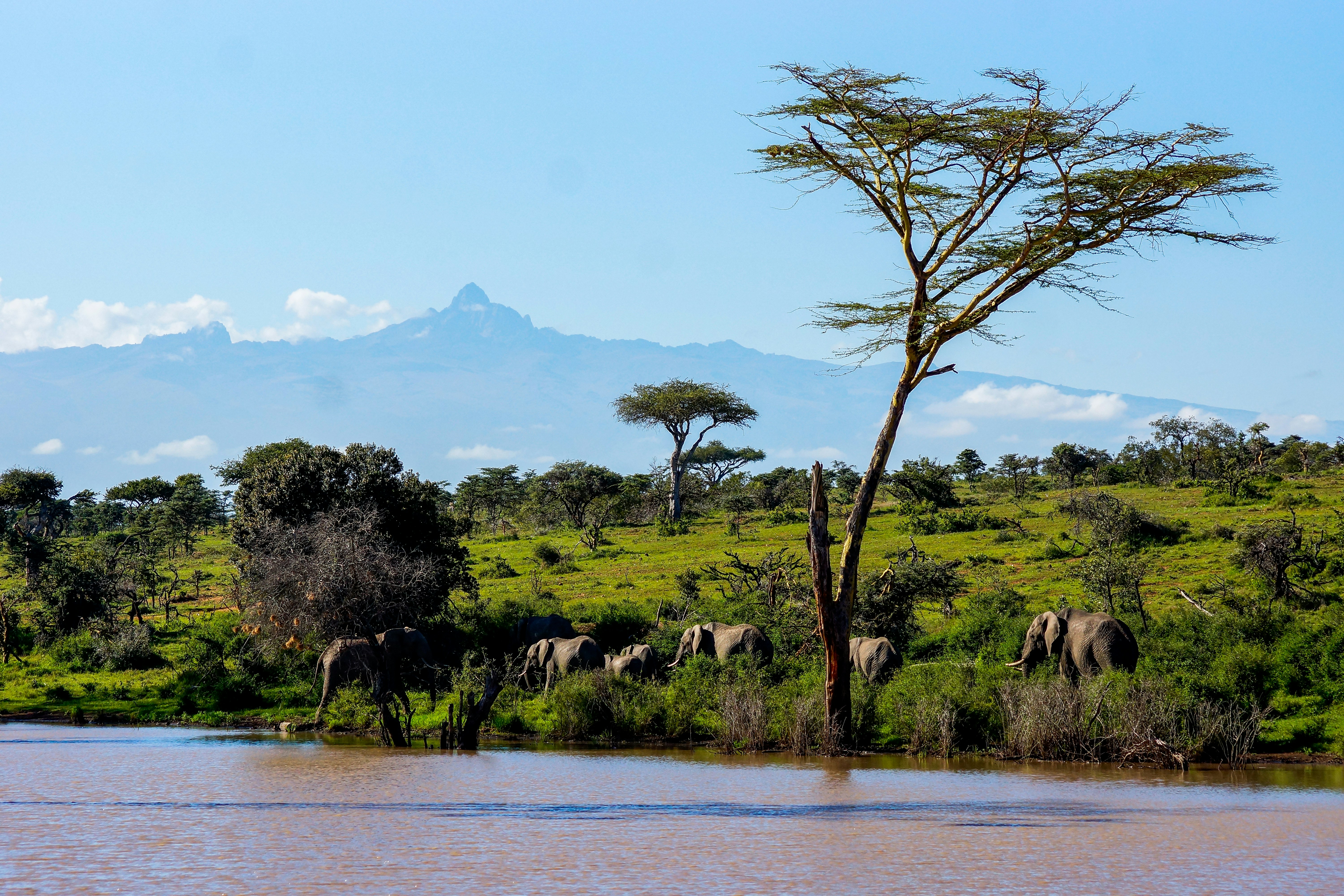
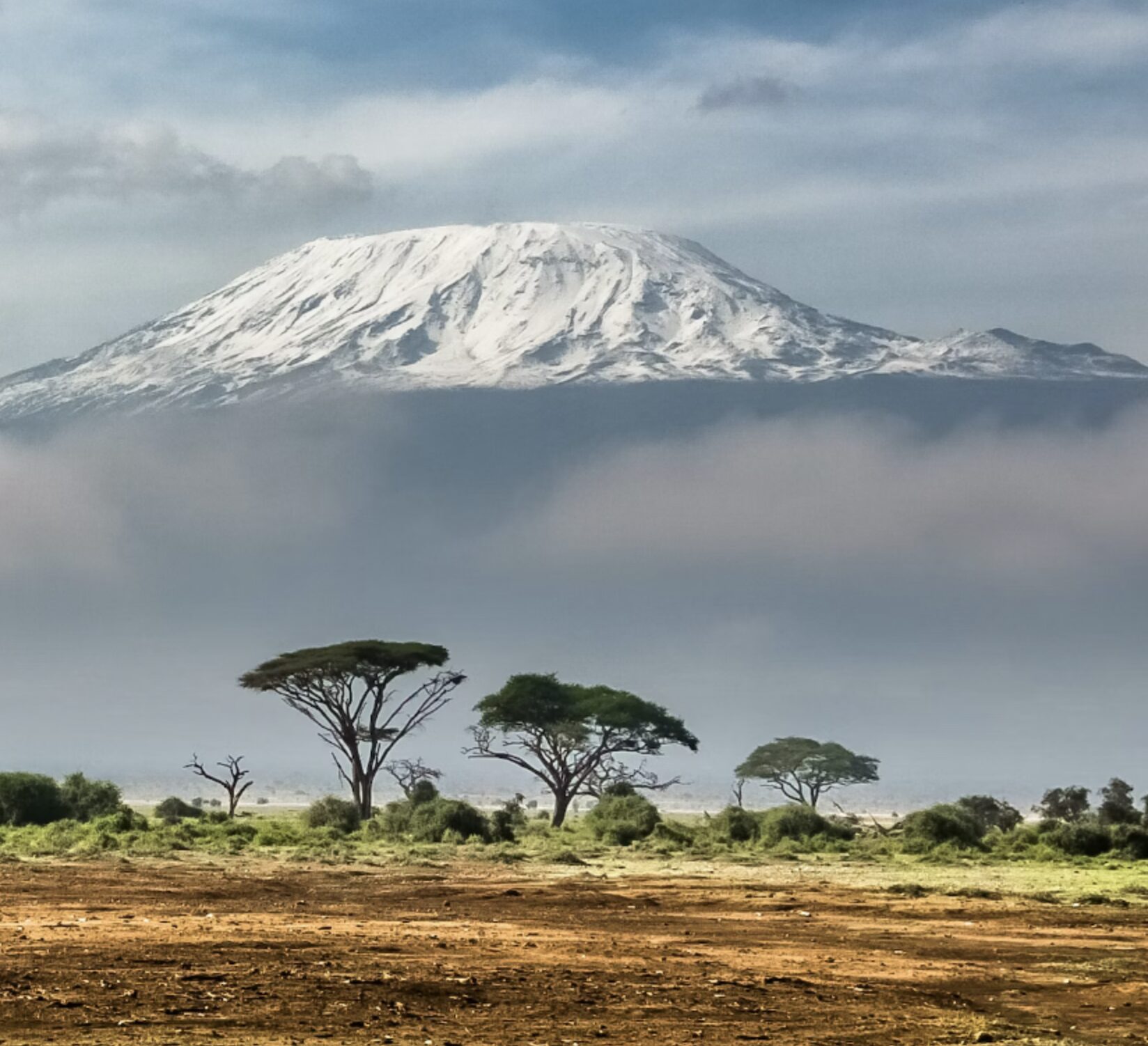
East Africa is a region where the crisis is most pronounced. Mt. Kilimanjaro in Tanzania, Mt. Kenya, and the Rwenzori Mountains on the border of the Democratic Republic of the Congo and Uganda hold the last three glacier sites on the African continent – and they’re disappearing faster than almost anywhere else on Earth. By 2040, Kilimanjaro’s glaciers could be gone; Mt. Kenya’s might vanish even sooner, within the next four years.
Recent remote sensing data show that in 2022, the total remaining glacier area in East Africa was just 1.36 square kilometres, marking a decline of more than 300 per cent as compared to 2000.
The Ngare Ndare River, fed by Mt. Kenya’s glaciers and snowpacks, has dropped in water level by 30 per cent in the past decade, causing the more than 2 million people in Kenya and Tanzania who depend on this water to feel these changes acutely – from reduced stream flow to lower crop yields and milk production, and more soil erosion, diseases and landslides.
UNEP is working with governments, regional bodies, local and national NGOs, and communities to build and strengthen resilience in the face of the changing conditions. The Adaptation at Altitude Programme and the Mountains ADAPT solutions collation are two initiatives that UNEP – as part of its new Resilient Mountains project – and partners are implementing to help East African mountain communities build resilience, including through diversifying livelihoods, restoring landscapes, strengthening forests and using nature-based solutions to improve food production and water management.
Since 2023, UNEP has also facilitated the set-up and piloting of the Mountains ADAPT Small Grants programme, funded by Austria, which in its full 2026 roll-out will support community-based organizations with small grants to implement locally led adaptation and resilience projects. In 2025, the Yiaku Laikipiak Trust near Mount Kenya used a grant to improve food sovereignty, helping more than 400 Indigenous Yiaku people build resilience to environmental and market shocks through climate-smart crops and improved watering systems.
Ice on the agenda
Recognizing that glacier loss is a global concern requiring coordinated action, Member States are considering a new resolution proposal related to glaciers and the wider cryosphere, which will be discussed at the 7th United Nations Environment Assembly (UNEA-7). This assembly is the highest-level decision-making body for the environment and will be hosted by UNEP at its Nairobi headquarters from 8-12 December.
The draft resolution builds on the UN General Assembly’s decision to declare 2025 the International Year of Glaciers’ Preservation and 21 March as the annual World Day for Glaciers.
In the lead-up to UNEA-7, UNEP Patron of the Oceans, maritime lawyer and endurance swimmer Lewis Pugh will climb Mt. Kenya to spotlight the rapid retreat of its glaciers, which now cover just 0.069 square kilometres. The Lewis Glacier, once the mountain’s largest, has lost 62 per cent of its surface in only five years. At altitude, Pugh will swim in glacial lake Tarn Lewis to bring awareness to its decline.
“Glaciers are an early warning system, and that alarm is sounding loud,” said Julian Blanc, Director of UNEP’s Biodiversity and Land Branch. “When we lose glaciers, we don’t just lose ice – we lose water, food security, heritage, cultures and the chance of a stable future. Every fraction of a degree counts. It’s not too late to save a large amount of our glaciers.”
Further resources

Adaptation to climate change in the mountains of East Africa



Meeting of Mountain Platforms of the Alps, East Africa and the Andes: Connecting Biodiversity Conservation and Climate Change Adaptation


Comments
There is no contentYou must be logged in to reply.